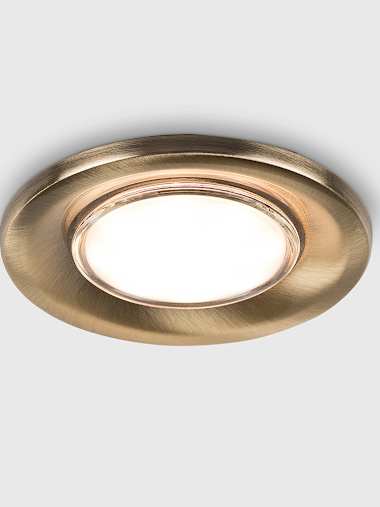
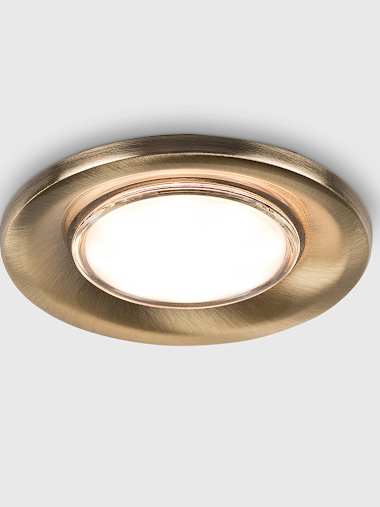
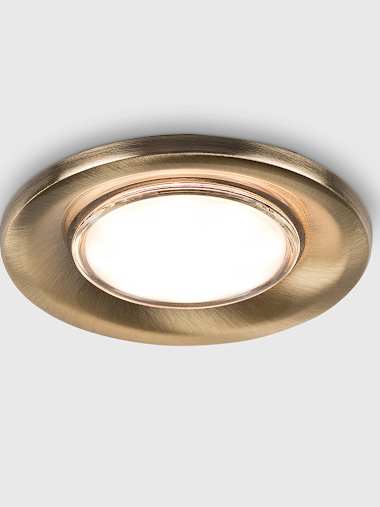
How many downlights do I need?
Generally, you should be aiming to have one downlight every 1.5 to 2 square metres of your chosen room to ensure that the room is illuminated evenly, though you'll also need to consider the room's layout and shape when doing this. It's also important to factor in any important areas of the room that'll need specific lighting. For example, if you're looking to install downlights in your
kitchen, you'll need to consider task lighting for areas like the sink, the hob and countertops for food preparation and other similar tasks!
What are fire rated downlights?
Downlights require holes to be cut into your ceiling to be installed, which will reduce the fire protection capabilities of that ceiling. Fire rated downlights mitigate this issue as they come with an intumescent pad that expands and blocks the hole cut into the ceiling. This helps to slow the spread of a fire that occurs, especially from a downstairs room like a kitchen to rooms upstairs in the house.
Do downlights need to be fire rated?
Whether or not a downlight needs to be fire rated depends on the room they're intended for use in. For any downstairs rooms in a house, especially kitchens and bathrooms, fire rated downlights are recommended. For rooms that wouldn't have any occupants directly above them, like upstairs rooms and bedrooms, non-fire rated downlights can be used.
What are the best downlights to use in a kitchen?
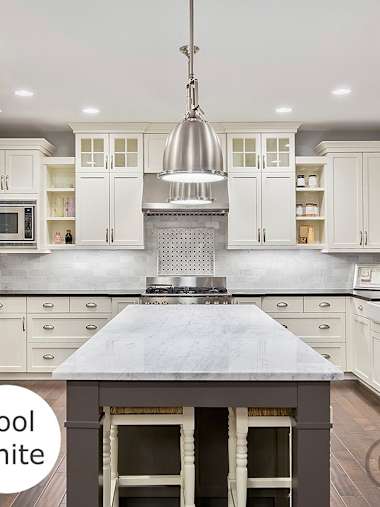
While opinions on the best kitchen downlights may vary due to personal preferences, it's generally recommended that kitchen downlights are fire rated and use either LEDs for energy efficiency, or GU10 style bulbs for easy replacement. The ideal
colour temperature of kitchen downlights should aim to be somewhere within the warm-to-neutral range of 3000-5000 Kelvins, as towards the warmer end of this range the downlights are ideal for providing a more inviting light while kitchen downlights towards the more neutral end of this range are better placed above task-focused areas like countertops.